
題目列表(包括答案和解析)
|
聽(tīng)力(共15小題,第一二節(jié)每小題1分,第三節(jié)每小題2分,共20分) 第一節(jié):聽(tīng)小對(duì)話(huà),從A、B、C三個(gè)選項(xiàng)中選擇正確的選項(xiàng)回答問(wèn)題。 1.What does Jim think of the movie? A.Great B.Boring C.Terrible 2.How does the girl feel? A.A little cold B.A little better C.Very tired 3.Where do you think Lucy will be tonight? A.At a cinema B.In a park C.At home 4.How much did the woman's son pay for his coat? A.$ 200 B.$ 150 C.$ 100 5.When did the boy fall ill? A.Last night B.Yesterday afternoon C.This evening 第二節(jié):聽(tīng)長(zhǎng)對(duì)話(huà),從A、B、C三個(gè)選項(xiàng)中選擇正確的選項(xiàng)回答問(wèn)題。 聽(tīng)下面一段較長(zhǎng)的對(duì)話(huà),回答6-7小題。 6.Where is the railway station? A.On the left of the street. B.At the end of the street. C.Behind a red building. 7.How will the man get there? A.On foot. B.By bus. C.By taxi. 聽(tīng)下面一段較長(zhǎng)的對(duì)話(huà),回答8-10小題。 8.Why does the woman make the phone call? A.Because she hopes to find a job. B.Because she wants to know more about the club. C.Because she plans to go to evening classes. 9.On which day don't the people have a language evening? A.Monday. B.Tuesday. C.Wednesday. 10.What language does the woman speak besides English and French? A.Spanish. B.Japanese. C.Chinese. 第三節(jié):聽(tīng)獨(dú)白,根據(jù)內(nèi)容,從A、B、C三個(gè)選項(xiàng)中選擇正確的選項(xiàng),完成信息記錄表。
11. A.Man and Nature B.Gone with the Wind C.Harry Potter 12. A.¥20. B.¥12 C.¥24 13. A.College students B.Middle school students C.Primary school students 14 A.It's about how to study English. B.It's about how to get on well with others C.It's about how to protect the environment. 15. A.Next Monday afternoon. B.Next Monday morning C.This Friday afternoon. | ||
聽(tīng)力理解(共24分)
一、聽(tīng)對(duì)話(huà),從下面各題所給的A、B、C三幅圖片中選擇與對(duì)話(huà)內(nèi)容相符的圖片。每段對(duì)話(huà)讀兩遍。(共4分,每小題1分)
1.
A.
B.
C.
2.
A.
B.
C.
3.
A.
B.
C.
4.
A.
B.
C.
二、聽(tīng)對(duì)話(huà)或獨(dú)白,根據(jù)對(duì)話(huà)或獨(dú)白的內(nèi)容,從下面各題所給的A、B、C三個(gè)選項(xiàng)中選擇最佳選項(xiàng)。每段對(duì)話(huà)或獨(dú)白讀兩遍。(共12分,每小題1分)
請(qǐng)聽(tīng)一段對(duì)話(huà),完成第5至第6小題。
5.Where’re the speakers?
A.In a school.
B.In a library.
C.In a shop.
6.What does the woman want?
A.Books.
B.Apples.
C.Coats.
請(qǐng)聽(tīng)一段對(duì)話(huà),完成第7至第8小題。
7.Where is the woman going?
A.Beijing Hotel.
B.Beijing Zoo.
C.Beijing Theater.
8.How is the woman going there?
A.By taxi.
B.By bus.
C.On foot.
請(qǐng)聽(tīng)一段對(duì)話(huà),完成第9至第10小題。
9.How many CDs does Alice have?
A.About 100.
B.About 200.
C.About 300.
10.What’re the speakers mainly talking about?
A.Alice’s parents.
B.Alice’s birthday.
C.Alice’s hobby.
請(qǐng)聽(tīng)一段對(duì)話(huà),完成第11至第13小題。
11.Where did the girl go last night?
B.To a hospital.
C.To a school.
12.What does the girl think of math?
A.Interesting.
B.Difficult.
C.Popular.
13.Who will help the girl?
A.The doctor.
B.The teacher.
C.The boy.
請(qǐng)聽(tīng)一段獨(dú)白,完成第14至第16小題。
14.What should you consider if you want to be a volunteer?
A.Skills and experience.
B.Interests and skills.
C.Experience and choices.
15.How many suggestions does the speaker make?
A.6.
B.5.
C.4.
16.How can you get more information about young volunteers?
A.By mail.
B.Over the phone.
C.On the Internet.
三、聽(tīng)對(duì)話(huà),根據(jù)所聽(tīng)到的對(duì)話(huà)內(nèi)容和提示詞語(yǔ),記錄關(guān)鍵信息。對(duì)話(huà)讀兩遍。(共8分,每小題2分)

聽(tīng)力測(cè)試
Ⅰ.聽(tīng)對(duì)話(huà),選出與對(duì)話(huà)內(nèi)容相符的圖片。每段對(duì)話(huà)讀兩遍。

1.________ 2.________ 3.________ 4.________ 5.________
Ⅱ.聽(tīng)句子,選擇正確答語(yǔ)。每個(gè)句子讀兩遍。
6.A.It’s big.
B.It’s blue.
C.It’s made in Chrina.
7.A.All right.
B.Thanks a lot.
C.Never mind.
8.A.Twice a week.
B.By car.
C.Two days ago.
9.A.No, I won’t.
B.Good idea.
C.Well done.
10.A.From London.
B.For a meeting.
C.In England.
Ⅲ.對(duì)話(huà)理解。聽(tīng)下面7段對(duì)話(huà),每段對(duì)話(huà)后有一個(gè)或幾個(gè)小題,從題中所給的A、B、C三個(gè)選項(xiàng)中選出最佳選項(xiàng)。每段對(duì)話(huà)讀兩遍。
聽(tīng)第一段對(duì)話(huà),回答第11小題。
11.What kind of animal does Michael like best?
A.Pandas.
B.Dogs.
C.Cats.
聽(tīng)第二段對(duì)話(huà),回答第12小題。
12.Where was Ann last night?
A.At home.
B.In the hospital.
C.At school.
聽(tīng)第三段對(duì)話(huà),回答第13小題。
13.What’s the relationship(關(guān)系)between the two speakers?
A.Teacher and student.
B.Husband and wife.
C.Father and daughter.
聽(tīng)第四段對(duì)話(huà),回答第14小題。
14.What does Bob want to have for breakfast?
A.Noodles.
B.Sandwiches.
C.Dumplings.
聽(tīng)第五段對(duì)話(huà),回答第15小題。
15.What does the man want to buy?
A.Some new pens.
B.Some new books.
C.Some New Year’s cards.
聽(tīng)第六段對(duì)話(huà),回答第16、17小題。
16.What’s the matter with the woman?
A.She has a cold.
B.She has a toothache.
C.She has a cough.
17.What did the doctor ask her to do?
A.Stay in hospital.
B.Take a rest.
C.Take some medicine.
聽(tīng)第七段對(duì)話(huà),回答第18至20小題。
18.What will Jane do this weekend?
A.Join a club.
B.Go to a concert.
C.See a movie.
19.How much does a ticket cost?
A.¥20.
B.¥40.
C.¥60.
20.What will the speakers do to raise money for the concert?
A.Sell newspapers.
B.Sell flowers.
C.Ask their parents for help.
Ⅳ.聽(tīng)短文,判斷下列句子是否符合短文內(nèi)容(符合用“T”表示,不符合用“F”表示)。短文讀兩遍。
21.The young man sent roses to the girl as a birthday present.
22.The shopkeeper didn’t know the young man.
23.The girl was 22 years old then.
24.The next morning 32 roses were sent to the girl.
25.The girl was happy when she received the roses.
Ⅴ.聽(tīng)短文,根據(jù)短文內(nèi)容填寫(xiě)表格(每空一詞)。短文讀三遍。

聽(tīng)力理解
A)聽(tīng)句子(本大題共5小題,每小題1分,共5分)
根據(jù)句子的內(nèi)容和所提的問(wèn)題,選擇符合題意的圖畫(huà)回答問(wèn)題。每小題聽(tīng)一遍。
1.How does Li Yang improve his English?

2.Where did the girl's grandma use to live?

3.Which coat did the girl probably buy?

4.How does Jim often do to keep healthy?

5.What does the speaker reuse the water to do?

B)聽(tīng)對(duì)話(huà)(本大題共10小題,每小題1分,共10分)
回答每段對(duì)話(huà)后的問(wèn)題,在各題所給的選項(xiàng)中選出一個(gè)最佳答案。每段對(duì)話(huà)聽(tīng)兩遍。
聽(tīng)第一段對(duì)話(huà),回答第6小題。
6.Where will the beach party be?
A.By the trees.
B.By the boats.
C.At the coffee shop.
聽(tīng)第二段對(duì)話(huà),回答第7小題。
7.What are they talking about?
A.Buying a birthday present.
B.Learning English.
C.Having a birthday party.
聽(tīng)第三段對(duì)話(huà),回答第8小題。
8.Where does this dialogue happen?
A.In a clothes shop.
B.In a restaurant.
C.In a tea house.
聽(tīng)第四段對(duì)話(huà),回答第9小題。
9.What color is Kathy's bedroom now?
A.Green.
B.Blue.
C.Yellow.
聽(tīng)第五段對(duì)話(huà),回答第10小題。
10.What can we learn from the dialogue?
A.The girl has finished her science homework.
B.The boy has finished his math homework.
C.The boy has finished his English exercises.
聽(tīng)第六段對(duì)話(huà),回答第11-12小題。
11.When is Jack's father's birthday?
A.This Sunday.
B.This Thursday.
C.This Saturday.
12.What are they going to do for Jack's father's birthday?
A.They're going to have a party.
B.They're going to have a picnic.
C.They're going to have a big dinner.
聽(tīng)第七段對(duì)話(huà),回答第13-15小題。
13.What are the man and woman doing?
A.They are talking on the phone.
B.They are listening to the weather report on the radio.
C.They are watching the weather report.
14.What's the weather like in Sanya now?
A.Hot and dry.
B.Hot and wet.
C.Wet and cool.
15.Where are Mike's family going to spend their holiday?
A.In Guangdong.
B.In Guangxi..
C.In Hainan.
C)聽(tīng)短文(本大題共5小題,每小題1分,共5分)
在每小題給出的三個(gè)選項(xiàng)中,選出一個(gè)能回答所提問(wèn)題的最佳選項(xiàng)。本題聽(tīng)兩遍。
16.Where did Peter work?
A.In a school
B.In an office
C.In a hospital.
17.Why did Peter make mistakes in his work two weeks ago?
A.Because he was bad at his work
B.Because he couldn't sleep well at night.
C.Because the doctor gave him wrong medicine.
18.When did Peter go to the hospital?
A.Last Tuesday
B.Last Friday
C.Last Monday.
19.Did Peter have a good sleep after he took the medicine?
A.Yes,he did
B.No,he didn't
C.No,he was even worse.
20.Who was angry with Peter?
A.Peter's boss
B.Peter's mother
C.Peter's father
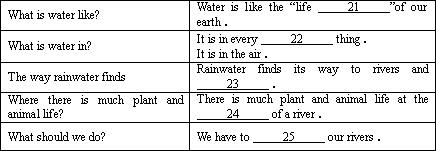
D).聽(tīng)填信息(本大題共5小題,每小題2分,共10分)你將聽(tīng)到一段有關(guān)水的文章。請(qǐng)根據(jù)你所聽(tīng)到的內(nèi)容,填寫(xiě)信息,完成有關(guān)記錄。本題聽(tīng)兩遍。
聽(tīng)力測(cè)試
Ⅰ.聽(tīng)句子,選擇與句子情景相關(guān)的圖。句子讀一遍。(每小題1分,共5分)
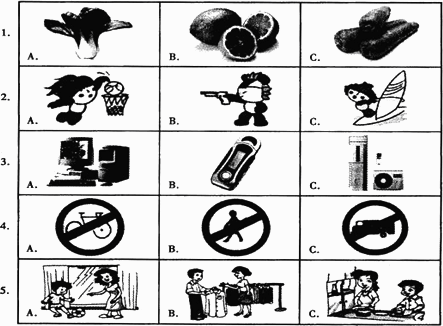
Ⅱ.聽(tīng)句子,選擇恰當(dāng)?shù)拇鹫Z(yǔ)。句子讀一遍。(每小題1分,共5分)
6.A.It’s nine o’clock.
B.It’s Thursday.
C.It’s June 11th.
7.A.It’s hard to say.
B.You’re welcome.
C.I’d like to buy a computer.
8.A.Thank you.
B.Never mind.
C.Of course not.
9.A.That’s OK.
B.Good idea.
C.Not at all.
10.A.It’s wonderful.
B.It’s too big.
C.It’s round.
Ⅲ.聽(tīng)對(duì)話(huà),選擇正確的答案。對(duì)話(huà)讀兩遍。(每小題1分,共10分)
聽(tīng)第一段對(duì)話(huà),完成第11小題。
11.What does the girl want?
A.A cup of tea.
B.A glass of water.
C.A bottle of milk.
聽(tīng)第二段對(duì)話(huà),完成第12小題。
12.How did John go to school this morning?
A.By bus.
B.On foot.
C.By bike.
聽(tīng)第三段對(duì)話(huà),完成第13小題。
13.Where was Betty born?
A.Canada.
B.America.
C.England.
聽(tīng)第四段對(duì)話(huà),完成第14-15小題。
14.What was Peter doing at four yesterday afternoon?
A.Sleeping.
B.Watching TV.
C.Answering the phone.
15.What’s the relationship between the two speakers?
A.Mother and son.
B.Husband and wife.
C.Classmates.
聽(tīng)第五段對(duì)話(huà),完成第16-17小題。
16.Where did the man go in the summer holidays?
A.To a farm.
B.To his hometown.
C.To the seaside.
17.How long did he stay there?
A.For a month.
B.For two weeks.
C.For a week.
聽(tīng)第六段對(duì)話(huà),完成第18-20小題。
18.Which city is the man leaving for?
A.Moscow.
B.London.
C.New York.
19.When did the last train leave?
A.At 9∶50.
B.At 9∶55.
C.At 10∶30.
20.Where can the man buy the ticket?
A.on the train.
B.Near the bus station.
C.At the ticket window.
Ⅳ.聽(tīng)短文,選擇最佳答案。短文讀兩遍。(每小題1分,共5分)
21.The two men walked in the street one evening because they ________.
A.couldn’t fall asleep
B.wanted to steal something
C.wanted to take a walk
22.It was ________ at night.
A.ten
B.eleven
C.twelve
23.Why did the dog run out of the house and bark(狗叫)?
A.It knew the two men.
B.It understood English.
C.It found someone outside.
24.What was the result?
A.The two young men stole nothing.
B.The two young men were caught.
C.The dog followed the two young men to a lonely place.
25.Which if the following is TRUE?
A.The dog was asleep all the night.
B.The two thieves spoke English.
C.The two thieves were too frightened to run.
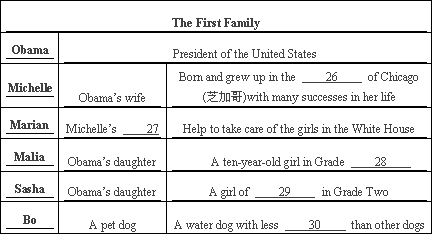
Ⅴ.聽(tīng)短文,完成下面表格,每空一詞。短文讀兩遍。(每小題1分,共5分)
國(guó)際學(xué)校優(yōu)選 - 練習(xí)冊(cè)列表 - 試題列表
湖北省互聯(lián)網(wǎng)違法和不良信息舉報(bào)平臺(tái) | 網(wǎng)上有害信息舉報(bào)專(zhuān)區(qū) | 電信詐騙舉報(bào)專(zhuān)區(qū) | 涉歷史虛無(wú)主義有害信息舉報(bào)專(zhuān)區(qū) | 涉企侵權(quán)舉報(bào)專(zhuān)區(qū)
違法和不良信息舉報(bào)電話(huà):027-86699610 舉報(bào)郵箱:58377363@163.com